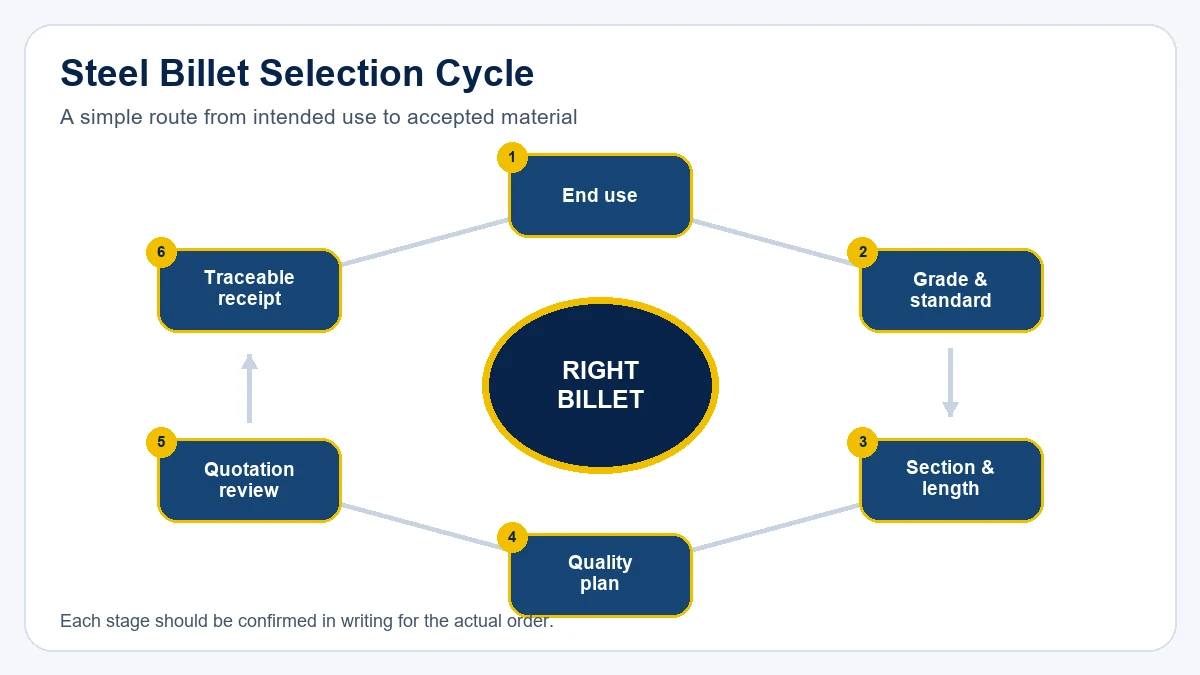
1. Correct material
The grade and standard edition should suit the component and downstream process. Similar grade names are not automatically interchangeable.

MS, carbon and alloy steel billets in published square sizes for rolling, forging and industrial conversion requirements.
Direct product answer
Jain Steels Group manufactures steel billets in Mandi Gobindgarh, Punjab, and reviews supply enquiries from buyers across India. The published range includes MS, carbon steel and alloy steel billets in 80 × 80, 100 × 100, 125 × 125 and 160 × 160 mm square sections for rolling, forging and industrial conversion. A steel billet is a semi-finished solid section; the applicable grade, standard, cut length, condition, quantity, testing, traceability and destination must be confirmed before quotation.
| Manufacturer location | Mandi Gobindgarh, Punjab, India |
|---|---|
| Published sections | 80 × 80, 100 × 100, 125 × 125 and 160 × 160 mm square |
| Material families | Mild steel, carbon steel and alloy steel; exact grade and standard reviewed per enquiry |
| Downstream routes | Rolling, forging and industrial conversion |
| Order evidence | Required inspection, heat or batch traceability and MTC scope are agreed against the purchase specification |
| Buyer next step | Submit grade, standard, size, length, quantity, end use, testing and delivery location |
For definitions and sourcing guidance, read what a steel billet is. For route details, see the steel billet manufacturing process.
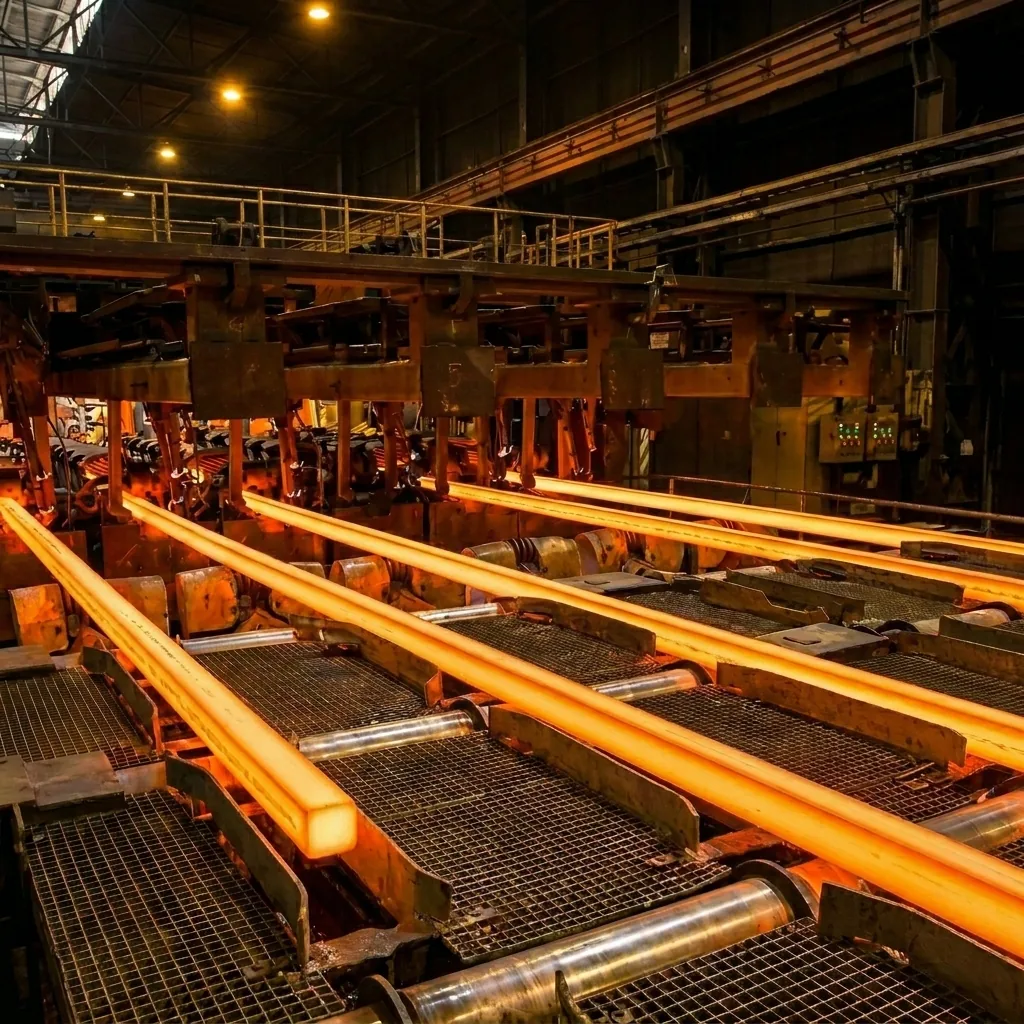
Jain Steels Group manufactures steel billets in Mandi Gobindgarh, Punjab, for rolling mills, forging units and industrial converters. The published range covers MS, carbon and alloy steel material families in 80 × 80, 100 × 100, 125 × 125 and 160 × 160 mm square sizes. Final grade, size, length, condition and quantity are confirmed against the enquiry.
Billet selection starts with the downstream route. A rolling requirement and a forging-quality steel billet requirement may need different chemistry limits, conditioning, surface acceptance, testing and traceability. The approved purchase specification and material test certificate—not a marketing grade name—control the supplied material.
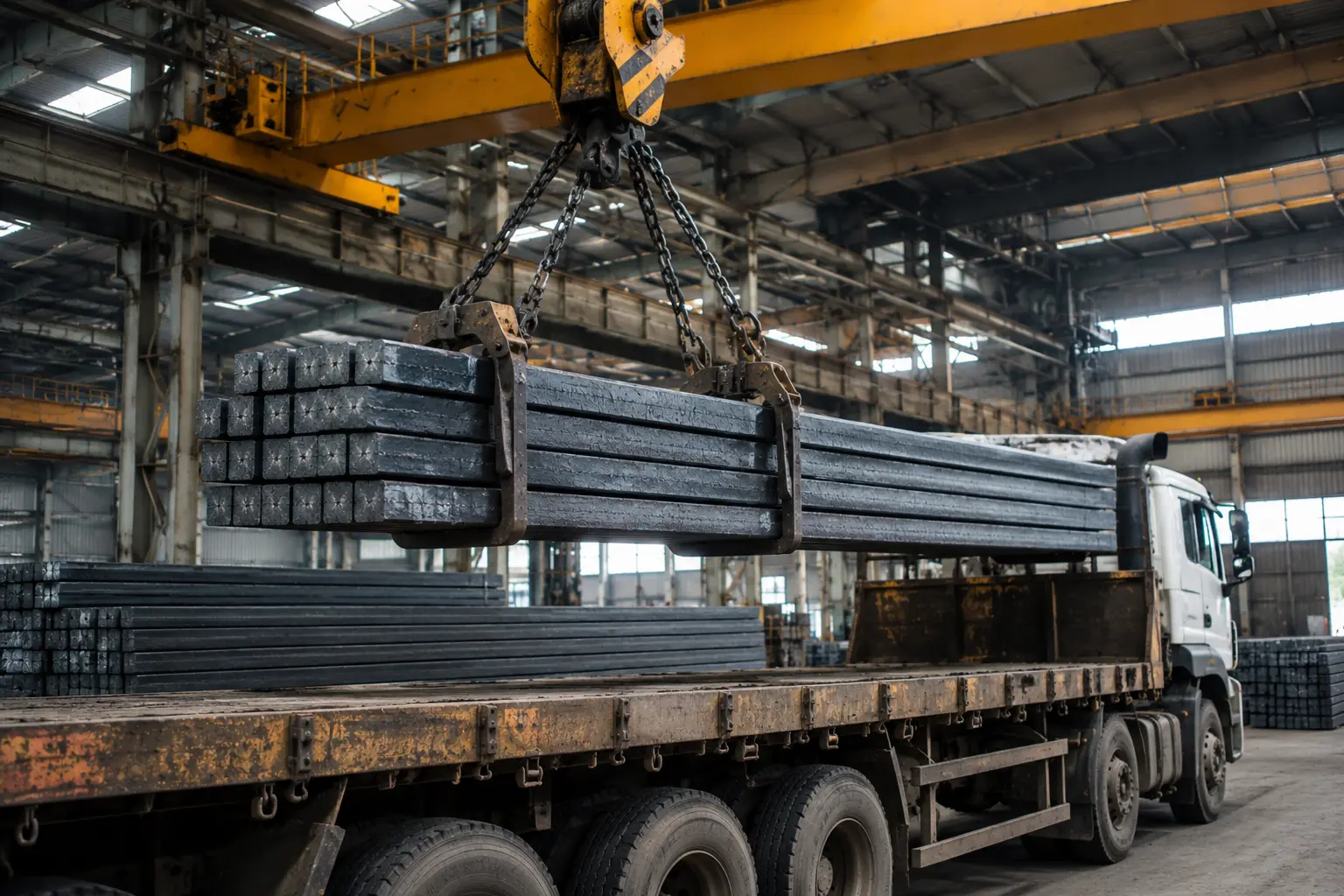


Manufactured with consistent chemical and metallurgical properties.
Designed for demanding rolling and forging operations.
Ensures smooth downstream processing and manufacturing.
Ideal for hot rolling, forging and steel conversion processes.
Available according to customer-specific requirements.
Manufactured under stringent inspection and testing procedures.
Used as raw material for producing bars, rods and sections.
Suitable for open die and closed die forging applications.
Used in manufacturing engineering components and products.
Supports production of automotive steel components.
Used for producing structural and construction steel products.
Preferred raw material for steel product manufacturers.
| Parameter | Details |
|---|---|
| Product | Steel Billets |
| Available square sizes | 80 × 80, 100 × 100, 125 × 125 and 160 × 160 mm |
| Length | Confirmed against grade, size, order quantity and production review |
| Grades | Mild Steel, Carbon Steel and Alloy Steel; exact grade and condition confirmed on enquiry |
| Standards | The governing IS, ASTM, DIN, EN or customer specification must be stated and approved for the order |
| Applications | Rolling Mills, Forging, Engineering & Steel Manufacturing |
“Forging quality” is an order requirement, not a single universal steel grade. A forging quality billet must be selected for the intended forged component, applicable grade standard and process route. Buyers should define chemistry, square size, cut length, surface condition, internal-soundness acceptance, testing, traceability and certification before order approval.
For an alloy steel forging-quality billet, also specify the grade—such as EN19 or 20MnCr5—the required supply condition, heat-treatment route and any ultrasonic or other inspection criteria. Jain Steels Group reviews these details before confirming manufacturability and availability.
| Buyer input | Why it matters |
|---|---|
| Grade and governing standard | Defines the controlling chemistry and mechanical requirements. |
| Forged component and process | Helps assess material family, reduction route and downstream suitability. |
| Square size, cut length and quantity | Establishes dimensional and production planning. |
| Surface and internal-soundness criteria | Sets measurable acceptance requirements for the order. |
| Testing, traceability and MTC | Defines the evidence required with the supply. |
The published route covers steel melting, refining, continuous casting, controlled cooling, identification, inspection and dispatch. The exact controls depend on the approved grade, standard, section and acceptance plan. Review the detailed manufacturing-process guide and the manufacturing infrastructure before submitting a specification.
Plain-language guide
A steel billet is a solid, semi-finished piece of steel. Think of it as the controlled starting block from which a mill or forge makes another product. It is not normally the finished component. The buyer selects a grade, square section, cut length and quality plan that suit the next operation, such as forging or rerolling.
Jain Steels Group publishes square billet references of 80 × 80, 100 × 100, 125 × 125 and 160 × 160 mm. Mild steel, carbon steel and alloy steel requirements are reviewed against the governing standard, intended use, quantity, testing and delivery programme. A published size does not mean that every grade-size combination is immediately available; confirmation is provided during quotation.
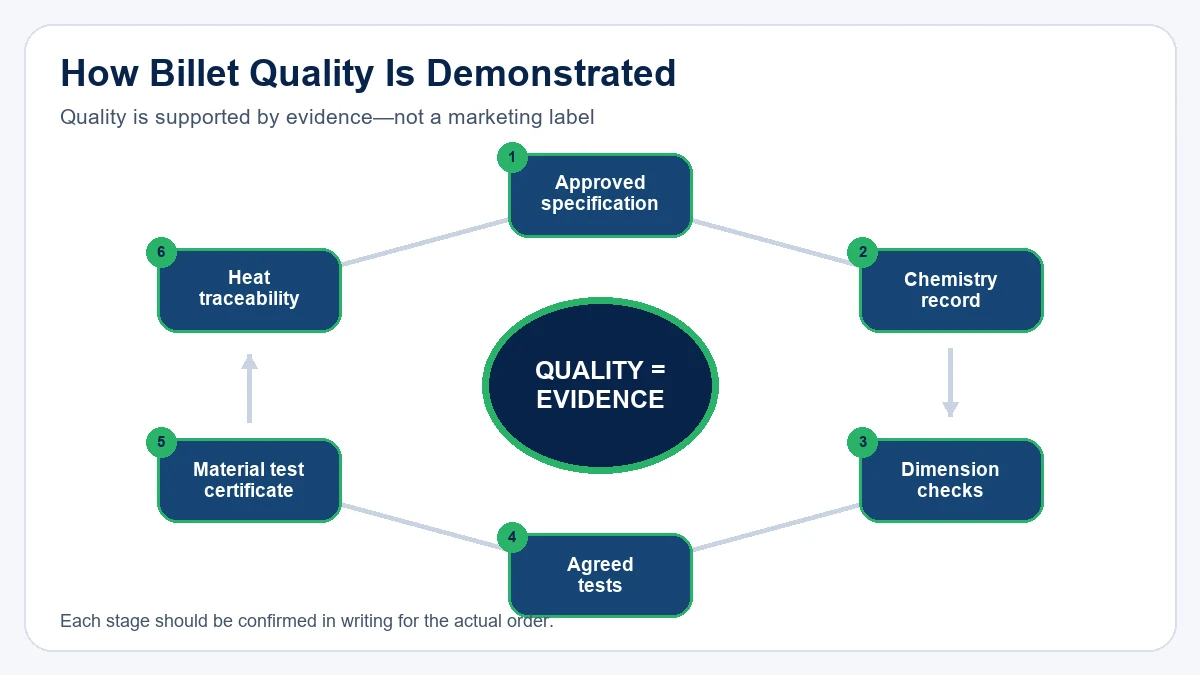
Confirm the manufacturing location, material and section capability, governing specification, inspection evidence, traceability, capacity planning and delivery scope. Jain Steels Group reviews these inputs from Mandi Gobindgarh, Punjab, before confirming an order.
The terms describe different parts of the buying decision. A manufacturer page explains where and how the material is produced. A supplier page explains how the requirement, documentation, quantity and delivery destination are coordinated. Jain Steels Group handles both discussions, but the purchase specification still controls the accepted order.
| Buyer’s question | Best starting page | Information to prepare |
|---|---|---|
| Can you manufacture my required billet? | Punjab manufacturing capability | Grade, standard, section, length, quantity and intended conversion route. |
| Is the manufacturing base in Mandi Gobindgarh? | Mandi Gobindgarh manufacturing page | Technical requirement, inspection scope and proposed dispatch programme. |
| Can you coordinate supply within Punjab? | Punjab supply page | Required date, destination, unloading constraints and documents. |
| Can you supply to another Indian state? | India supply page | Destination, quantity, freight basis, marking and certificate requirements. |
A buyer may search for “top steel billets” or a “top steel billet”, but there is no universal label that proves quality. The right billet is the one that matches the approved grade, standard, dimensions, downstream process and acceptance criteria. Marketing words should never replace measurable evidence.
The grade and standard edition should suit the component and downstream process. Similar grade names are not automatically interchangeable.
Section, cut length, tolerance, straightness and corner condition should match the forging or rolling plan.
Define chemistry, required tests, sampling, acceptance limits and the material test certificate before order confirmation.
Markings and documents should connect the dispatched material with its heat or batch records.
Quantity, packing, dispatch destination, freight basis and requested date should be written into the commercial review.
| Advantage | Why it matters to a non-technical buyer |
|---|---|
| Fewer misunderstandings | The manufacturer, purchase team and receiving team work from the same written requirement. |
| Better process fit | The billet section and material are considered together with the planned forging or rolling route. |
| Clear acceptance | Tests and limits are agreed before dispatch instead of being debated after receipt. |
| Useful traceability | Heat identification makes it easier to connect material, inspection records and certificates. |
| More comparable quotations | Suppliers can quote against the same technical, commercial and delivery scope. |
Content review: Reviewed by the Jain Steels Group production and quality team for buyer clarity. Last substantive update: 18 October 2026. Order-specific feasibility remains subject to written confirmation.
Quality requirements are order-specific. Buyers should state the chemistry limits, dimensions and tolerances, surface condition, any mechanical or metallurgical tests, any non-destructive testing method and acceptance class, marking, heat or batch traceability, and material test certificate format. Jain Steels Group reviews the requested scope before order confirmation; a website statement does not replace the governing standard or approved inspection plan.
See the steel quality, testing and traceability framework for the information required to define an acceptance plan.
Jain Steels Group manufactures billets in Mandi Gobindgarh, Punjab, for rolling, forging and industrial conversion requirements across India. Orders are reviewed by material family, square size, length, quantity, inspection scope and destination.
The range covers MS, carbon and alloy steel material families, with grade-specific pages for EN19 and 20MnCr5. Each enquiry is reviewed for the actual technical and commercial requirement rather than matched only by a broad product label.
Jain Steels Group manufactures steel billets in Mandi Gobindgarh, Punjab. Every enquiry is reviewed against the requested material, dimensions, quantity, downstream route, inspection and destination.
A steel billet is a semi-finished solid section used as feedstock for rolling, forging or another conversion route. It must be ordered to a defined grade, standard, size, condition and acceptance plan.
The published range covers MS, carbon and alloy steel billets, with dedicated information for EN19, 20MnCr5 and other confirmed alloy requirements.
The listed sizes are 80 × 80, 100 × 100, 125 × 125 and 160 × 160 mm. The final grade-size combination is confirmed per enquiry.
Yes. State the grade, governing standard, forging route, surface and internal-quality acceptance, test method, traceability and documentation required.
Define the required methods, sampling, acceptance values, heat or batch traceability, MTC format and any third-party inspection before quotation.
Provide the grade and standard, square size, cut length, quantity, supply condition, end use, tests, documentation and delivery location.
Explore focused pages for EN19, 20MnCr5 and alloy steel billets.
Source 20MnCr5 alloy steel billets for forging and rolling in verified square sizes, chemistry, lengths and bulk quantities.
View PageSource EN19 alloy steel billets for forging and rolling in verified sizes, chemistry, lengths and quantities from Punjab.
View PageExplore verified alloy steel billet grades, square sizes, chemistry and supply options for forging and rolling applications.
View PageSource mild steel billets for rolling and industrial conversion in verified square sizes, lengths and quantities.
View PageUse these supporting resources to define the grade, standard, dimensions, condition and inspection requirements before requesting a quotation.
Define the billet grade, square size, forging route, surface and internal-quality acceptance, traceability and documentation.
Steel billet sizes alone do not define acceptance. Before dispatch or receipt, the buyer and supplier should agree the governing standard, square section, length, surface condition, permissible dimensional variation, inspection method, sampling plan and documentation. Final acceptance values must come from the approved purchase specification; this page does not invent universal limits.
Match the heat, batch or lot reference and material certificate requirements to the purchase order.
Measure the requested square section and cut length using the agreed method and record the result.
Apply the buyer-approved method for diagonal, face or straightness checks; do not rely on a visual judgement alone.
Note the agreed surface acceptance, test evidence, exceptions and disposition before the billet enters rolling or forging.
Use the detailed square billet squareness and straightness inspection guide when setting up an incoming-material checklist. For grade-specific requirements, continue to alloy steel billets, EN19 steel billets or 20MnCr5 steel billets.
Continue to relevant product, technical and company information.
Jain Steels Group manufactures and supplies mild, carbon and alloy steel billets from Mandi Gobindgarh for forging, rolling and industrial conversion across India.
Manufacturing or supply availability is confirmed against the approved specification. Buyers in Mandi Gobindgarh, Punjab, Ludhiana, Jalandhar, Delhi NCR and other Indian regions should include the delivery destination with the enquiry.
Send Technical RequirementChoose the page that matches your manufacturing, supply and delivery intent.
Continue with the product, quality and buyer guidance relevant to this page.