
General procurement guidance only. The applicable material standard, drawing, quotation and purchase specification control each order.
Buyer summary
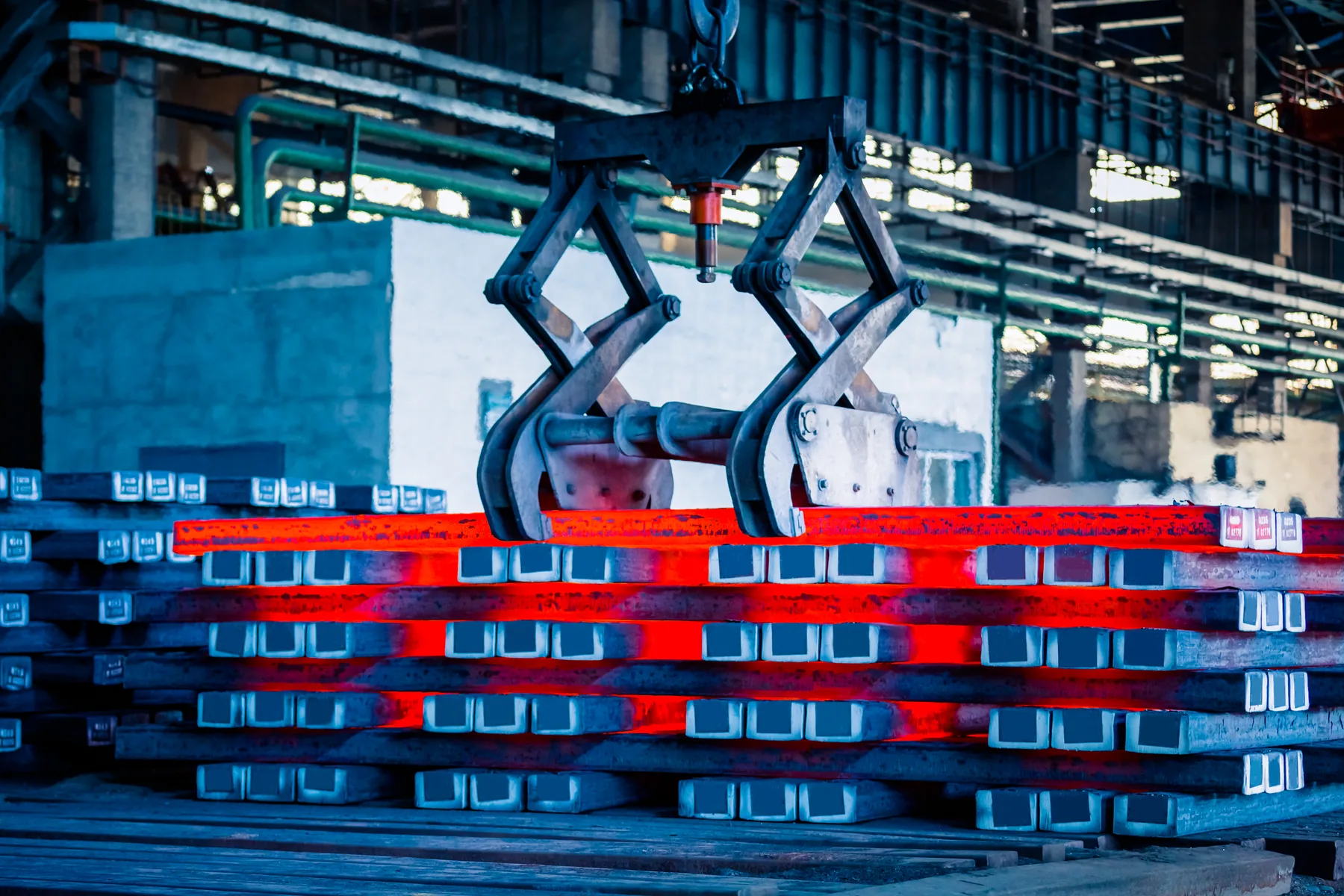
A steel billet is a semi-finished steel section produced for further conversion into bars, sections or forged components. Its grade, dimensions, surface condition and internal quality must suit the next manufacturing operation.
What is a steel billet?
A billet is not a finished component. It is controlled raw material for rolling, forging, extrusion or another conversion process. A useful billet specification therefore connects the steel grade and section size to the intended downstream equipment and finished product.
Steel billet vs ingot
An ingot is cast into a larger mould and normally requires substantial reduction before it becomes a smaller section or finished component. A billet is a smaller semi-finished section, often continuously cast or produced after reduction, intended for a more specific rolling or forging route. The terms should not be interchanged on drawings, enquiries or certificates.
Uses of steel billets
Rolling mills convert billets into round bars, square bars, flats and other long products. Forging companies heat and deform selected billet grades into gears, shafts, automotive parts and engineering components. The correct billet depends on the final component, reduction, heat treatment and acceptance plan.
Published billet sizes
Jain Steels Group publishes 80 × 80, 100 × 100, 125 × 125 and 160 × 160 mm square billet sizes. Grade, length, quantity, surface conditioning and route availability are confirmed against the enquiry.
Information required from the buyer
State the exact grade and standard, square size, cut length, tolerance, quantity, downstream route, surface and internal-quality criteria, test method, traceability, MTC scope and destination. The quotation and approved purchase specification control the order.
Continue to the relevant commercial page
Review the matching product or capability page, then send the exact grade, standard, dimensions, condition, quantity, testing, documentation and destination.